Is It Safe to Buy Property in North Cyprus? (Title Deeds & Legal Guide 2026)
A candid legal analysis of buying real estate in Northern Cyprus: Pre-74 Turkish Title vs Exchange (Eşdeğer), contract registration, and how to protect your investment.
Is It Safe to Buy Property in North Cyprus? The Legal Reality in 2026
The question "Is it safe to buy in North Cyprus?" is the primary concern for any prospective international investor. The geopolitical context of the island, coupled with persistent online misinformation, causes many buyers to either hesitate unnecessarily or enter transactions without conducting proper legal due diligence.
The short answer is yes, it is safe—provided you understand the different title deed categories, insist on an independent local lawyer, and register your contract at the Land Registry within 21 days.
1. The Three Title Deed Types Explained
Unlike jurisdictions with a single unified land registry, historical events in 1974 created distinct classifications of title deeds (Koçan) in the Turkish Republic of Northern Cyprus (TRNC).
A. Pre-1974 Foreign or Turkish Title (Türk Koçanı)
- What it is: Land that was owned by a Turkish Cypriot, British, or other foreign national prior to the 1974 division.
- Legal Status: Uncontested. Greek Cypriot authorities have never claimed ownership over these parcels.
- Risk Level: Zero historical dispute risk. These deeds trade at a modest premium due to unanimous international clarity.
B. Exchange Title (Eşdeğer)
- What it is: Land originally owned by Greek Cypriots in the north, awarded to Turkish Cypriots who abandoned land of equivalent value in Southern Cyprus following the 1974 events.
- Legal Status: Heavily protected under TRNC constitutional law and formally acknowledged via the Immovable Property Commission (IPC).
- ECHR Precedent: In 2010, the European Court of Human Rights issued its landmark Demopoulos v. Turkey decision, recognizing the IPC as an effective domestic remedy. This established that title issues can be resolved via compensation or exchange mechanisms rather than eviction of peaceful buyers.
- Risk Level: Extremely low. Approximately 80% of modern developments in Kyrenia and Iskele are built on Eşdeğer land. European banks and international conveyancers regularly approve these titles.
C. TMD / Allocation Title (Tahsis)
- What it is: Land granted by the government after 1974 to mainland Turkish settlers or military veterans as compensation for service or agricultural relocation.
- Risk Level: Moderate to High. These properties can occasionally face challenges if tested under international arbitration. Most independent European conveyancers advise foreign clients to avoid Tahsis deeds or proceed only after exhaustive title verification.
2. The Non-Negotiable Safeguards
If you observe the following three golden rules, your transaction in North Cyprus carries no more practical risk than purchasing off-plan in Spain, Portugal, or Greece:
Rule 1: Always Hire an Independent Lawyer
Never use a lawyer recommended directly by the real estate agency or the construction company. Your conveyancer must represent you alone. A reputable solicitor will conduct:
- Search of the Land Registry for hidden liens, mortgages, or bank encumbrances on the mother parcel.
- Verification of the developer’s building permits (İnşaat Ruhsatı) and zoning compliance.
- Confirmation of whether the site has an approved architectural project.
Rule 2: Register the Contract Within 21 Days
Under TRNC Estate Legislation, you must register your stamped Sales Contract at the District Land Registry within 21 calendar days.
- Once registered, the property is legally earmarked to your name.
- The vendor cannot take out a mortgage on the unit, sell it to anyone else, or use it as collateral.
- You obtain equitable title and the right to occupy or rent out the property.
Rule 3: Tie Payments to Verified Build Milestones
Never pay upfront in full on off-plan properties. Standard contracts should be divided into 4 to 6 progress payments:
- Reservation deposit (£2,000–£5,000).
- 35% on contract signing and registration.
- 20% on completion of concrete skeleton / brickwork.
- 20% on plastering, windows, and tiling.
- 20% on completion of interior fittings and electricals.
- 5% upon key handover and utility connection.
Summary: A Clear Framework for Peace of Mind
Purchasing property in North Cyprus is legally sound, commercially attractive, and protected by established land registry mechanisms—as long as you purchase Pre-74 or Eşdeğer titles and ensure your legal contracts are registered at the District Land Registry within the statutory 21-day timeline.
Frequently Asked Questions
Which title deed is the safest in North Cyprus?
Pre-1974 Turkish Title (Türk Koçanı) and Exchange Title (Eşdeğer) are internationally recognized by legal precedent (including the European Court of Human Rights Immovable Property Commission) and are considered the safest deeds to purchase.
Can a foreigner own freehold property in North Cyprus?
Yes. Foreign nationals can acquire freehold ownership of one residential property (or land up to 1 donum) in their own name upon receiving Permission to Purchase (PTP) from the Council of Ministers.
What is the Immovable Property Commission (IPC)?
The IPC is a body established under TRNC law and formally endorsed by the European Court of Human Rights (ECHR) in the Demopoulos ruling (2010) as an effective domestic remedy for property claims arising from the 1974 partition.
Featured Villas in Esentepe

Luxury 3BR Mykonos Villa in Esentepe – 3 Bedrooms, Private Pool & Terraces for 6 persons

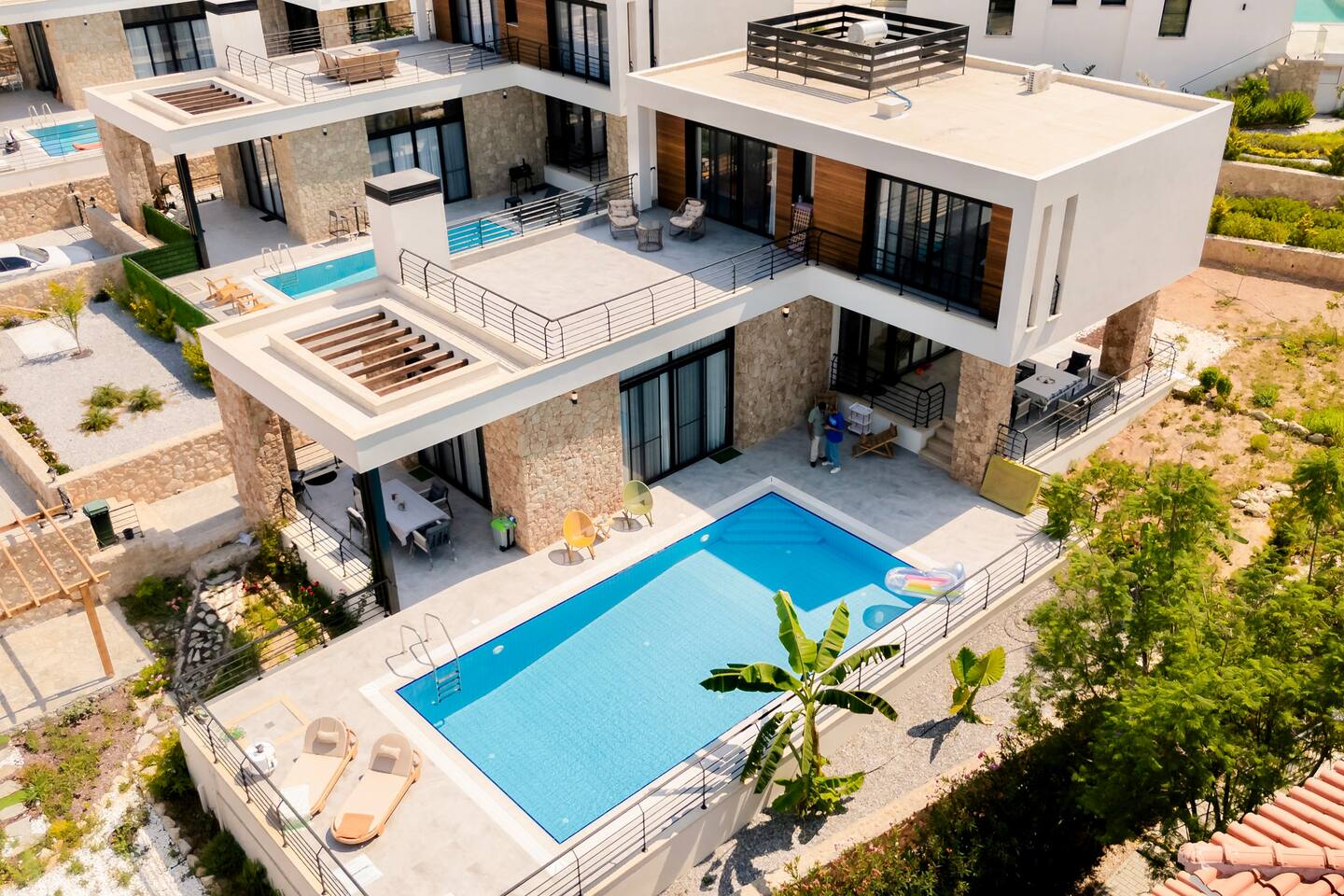
Villa | Private Pool · Sea View · Rooftop & Pool Terrace · Golf
Have questions about this guide?
Every relocation or property purchase has unique circumstances. Get instant answers from MERVE or speak directly with an independent advisor in Northern Cyprus.